Ottawa winters can expose weaknesses in household heating equipment. A furnace that operates adequately during mild autumn weather may struggle when temperatures remain below freezing for several consecutive days.
Scheduling furnace maintenance ottawa before the heating season helps homeowners identify potential problems and prepare their equipment for demanding winter conditions.
Why Ottawa’s Climate Makes Maintenance Important
Heating equipment in cold regions often operates more frequently and for longer periods than equipment in milder climates.
Repeated operating cycles contribute to normal mechanical wear.
Extended Heating Demand
During prolonged cold spells, furnaces must replace heat that continually escapes through walls, windows, and other building surfaces.
Restricted airflow or deteriorating components can make this task more difficult.
Routine inspections help identify performance problems before they interfere with indoor comfort.
Temperature Fluctuations
Ottawa frequently experiences changing temperatures during autumn and spring.
These fluctuations can cause heating equipment to cycle more frequently as indoor heating demand changes.
Monitoring unusual cycling patterns can help identify developing issues.
Winter Ventilation Concerns
Snow and ice can obstruct exterior intake or exhaust openings on certain heating systems.
Homeowners should visually check accessible exterior vents and follow manufacturer guidance for maintaining clearance.
Never operate equipment when required venting is blocked.
Creating a Seasonal Furnace Maintenance Checklist
A practical maintenance routine combines simple homeowner observations with professional technical inspections.
Early Autumn: Prepare the Equipment
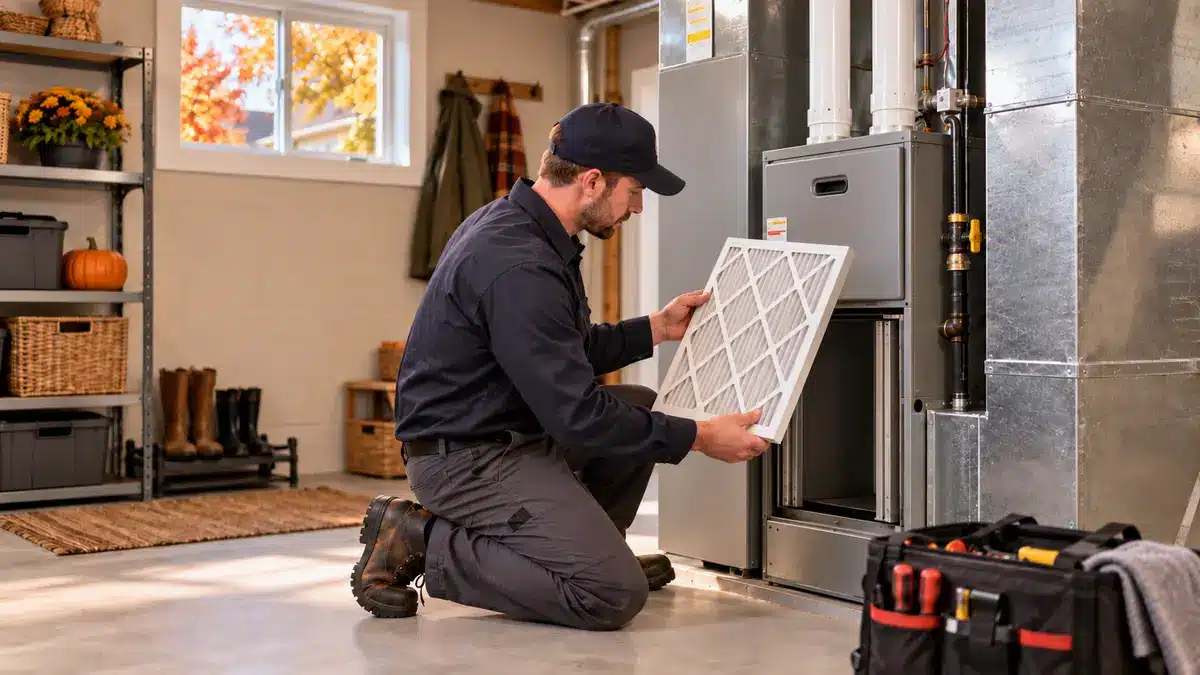
Before regular heating begins, inspect accessible air filters and replace them when necessary.
Check that supply registers and return-air openings remain unobstructed.
Test thermostat operation and listen for unfamiliar noises during normal heating cycles.
Midwinter: Monitor Performance
During periods of heavy heating demand, pay attention to temperature consistency.
Rooms that suddenly become colder may indicate airflow or equipment problems.
Watch for unusual cycling, persistent noises, and changes in heating performance.
Spring: Review Winter Operation
After the heating season, consider whether the furnace experienced recurring problems.
Document unusual sounds, comfort concerns, or unexpected shutdowns.
These observations can provide useful information during the next inspection.
What Professional Furnace Maintenance Includes
Technical maintenance involves more than replacing filters.
Inspecting Safety Controls
Safety controls help prevent equipment operation under certain unsafe conditions.
Qualified technicians can evaluate relevant controls and investigate signs of abnormal operation.
Evaluating Blower Performance
The blower distributes heated air through the home’s ductwork.
Dust accumulation, mechanical wear, or electrical problems can affect its operation.
An inspection may reveal conditions that require cleaning, adjustment, or corrective work.
Checking Combustion and Ventilation
Gas-fired heating equipment requires proper combustion and exhaust pathways.
Professional evaluation may include examining relevant venting and combustion conditions.
These checks are important for safe operation.
Common Maintenance Mistakes to Avoid
Some homeowners wait until heating performance noticeably declines before inspecting their equipment.
Others overlook filters or assume that every unusual noise is normal.
Furnace maintenance ottawa planning should focus on prevention rather than waiting for complete failure.
Avoid blocking return-air openings, repeatedly resetting safety controls, or attempting internal electrical repairs without appropriate qualifications.
For additional guidance, homeowners can explore Ottawa-area furnace maintenance information when planning seasonal inspections.
How Building Conditions Affect Furnace Performance
A furnace does not operate independently of the home.
Poor insulation, air leakage, and blocked airflow pathways can increase heating demand.
Improving these conditions may reduce unnecessary operating time and help maintain comfortable temperatures.
Even well-maintained equipment can struggle when the building loses heat faster than the heating system can replace it.
Conclusion
Preparing for Ottawa’s winter conditions requires consistent attention to heating performance and household energy efficiency.
Regular filter checks, clear ventilation pathways, thermostat monitoring, and professional inspections all support reliable operation.
A practical furnace maintenance ottawa routine helps homeowners recognize developing concerns, reduce preventable interruptions, and maintain dependable warmth throughout the heating season.
Read More at Kooper Magazine