
1. Introduction to Fascisterne
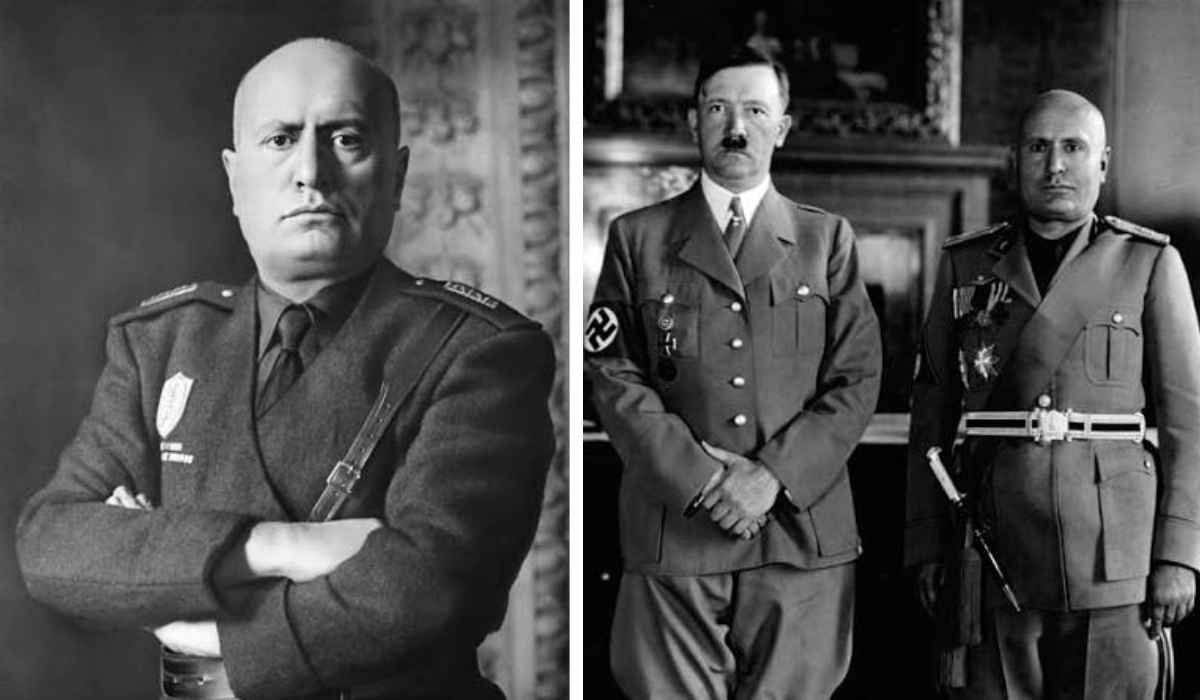
Fascisterne is a Danish word that translates into English as “the fascists.” It refers to individuals who support or belong to political movements associated with fascism, an authoritarian ideology that became influential in Europe during the twentieth century. Understanding this term requires looking at European history, political movements, nationalism, dictatorship, and the development of modern democratic systems. The subject remains important because historical fascist movements changed governments, influenced international conflicts, and caused enormous suffering across different communities.
2. What Does Fascisterne Mean?
In Danish grammar, fascisterne is the definite plural form of the word fascist. While fascist refers to an individual supporter of fascism, the Danish expression refers to a particular group of fascists. It does not identify one specific political party or organization. Its meaning depends on the historical or political context in which it appears. Readers may encounter the word in Danish newspapers, historical books, educational resources, and discussions about European political developments.
3. The Origin of the Word Fascist
The word fascist comes from the Italian term fascismo, which developed from fascio, meaning a bundle or group. Its historical symbolism is connected to the ancient Roman fasces, a bundle of rods associated with authority and political power. Benito Mussolini adopted this symbolism when establishing his political movement in Italy. The terminology eventually became associated with a broader political ideology characterized by authoritarian government, aggressive nationalism, centralized power, and opposition to democratic pluralism. Lex+1
4. Understanding the Ideology of Fascism
Fascism is generally understood as an authoritarian, ultranationalist political ideology. It places the interests of an imagined national community above individual freedoms and encourages strong centralized leadership. Historical movements associated with this ideology rejected liberal democracy, political pluralism, and independent opposition. They frequently promoted national unity through propaganda, political intimidation, and organized violence. Although different movements developed different policies, their common features included extreme nationalism, authoritarian leadership, militarism, and the suppression of political opponents.
5. How Fascism Began in Europe
Fascism developed during a period of political and economic uncertainty following the First World War. Several European countries experienced unemployment, inflation, social unrest, and dissatisfaction with existing political institutions. These conditions created opportunities for radical movements that promised national recovery and political stability. Fascist organizers used public frustration to attract supporters and challenge established governments. Italy became the first country where a fascist movement successfully established a dictatorship, creating a model that influenced political groups elsewhere.
6. Benito Mussolini and the Rise of Fascism
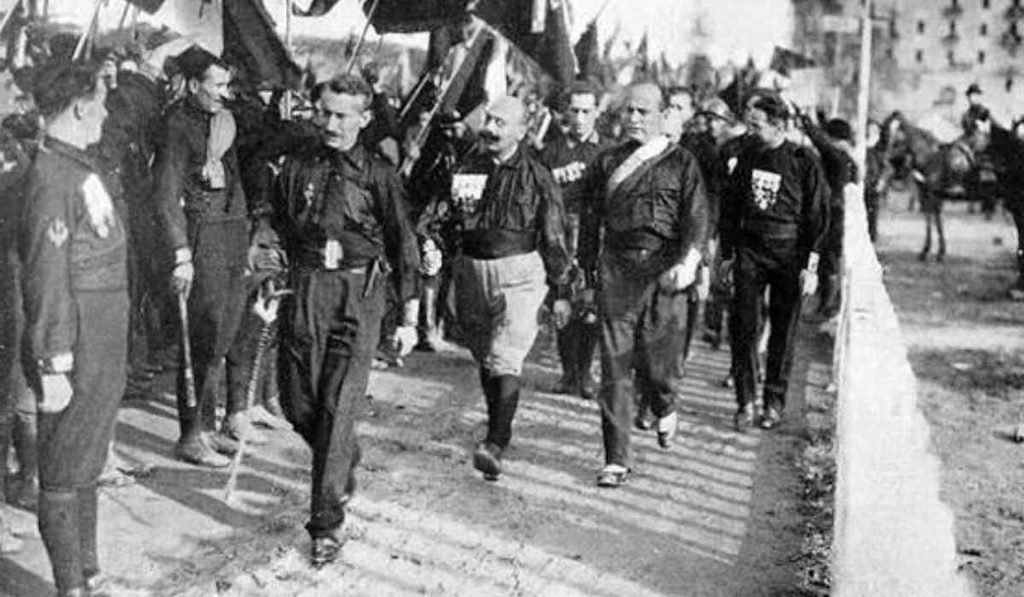
Benito Mussolini was the central figure behind the development of Italian fascism. In 1919, he established the Fasci Italiani di Combattimento, which later developed into the National Fascist Party. His supporters promoted nationalism, political discipline, and opposition to socialism. In October 1922, the March on Rome helped Mussolini become prime minister. He subsequently dismantled democratic institutions and established an authoritarian dictatorship that ruled Italy until the collapse of his regime during the Second World War.
7. Adolf Hitler and Nazi Germany
Adolf Hitler led Germany’s Nazi Party and established a dictatorship in 1933. Nazism shared important characteristics with Italian fascism, including extreme nationalism, authoritarian government, militarism, and the destruction of political opposition. However, Nazi ideology placed exceptional emphasis on racial hierarchy, antisemitism, and expansionist territorial ambitions. The Nazi regime organized systematic persecution and genocide, including the Holocaust, in which six million European Jews were murdered. Millions of other victims were also persecuted and killed. Holocaust Encyclopedia+1
8. Major Characteristics of Fascist Movements
Historical fascist movements shared several recognizable characteristics. These included authoritarian leadership, extreme nationalism, militarization, political propaganda, and hostility toward democratic institutions. Many movements also developed paramilitary organizations to intimidate opponents and demonstrate political strength. Their leaders often presented themselves as national saviors capable of restoring greatness. Independent newspapers, political parties, labor organizations, and civil society groups were frequently attacked or controlled. Understanding these characteristics helps readers distinguish historical fascism from ordinary political disagreement.
9. Nationalism and National Identity
Nationalism played a central role in fascist political thinking. Fascisterne inority communities could be portrayed as threats. This exclusionary approach weakened social equality and encouraged discrimination. Healthy national pride, however, should not automatically be confused with fascism because the two concepts are not identical.
10. Authoritarian Leadership and Political Control
Authoritarian leadership is another important characteristic of historical fascist governments. Political authority became concentrated in one leader and a small circle of loyal officials. Democratic checks and balances were weakened, while independent institutions lost their ability to challenge government decisions. Political opponents faced censorship, imprisonment, intimidation, or violence. Leaders also used personality cults to present themselves as extraordinary individuals who supposedly represented the interests of the entire nation. Such systems removed important protections against government abuse.
11. Propaganda and Public Influence
Propaganda helped fascist movements influence public opinion and maintain political control. Governments used newspapers, radio broadcasts, posters, public speeches, films, and organized rallies to communicate carefully selected messages. Their propaganda frequently glorified national strength and presented political opponents as dangerous enemies. Repeated slogans and emotional imagery encouraged loyalty while discouraging independent thinking. Studying historical propaganda is useful because it demonstrates how political communication can manipulate public emotions and influence the way people understand social and national events.
12. Fascism and Military Power
Military strength was highly valued by many fascist movements. Their leaders often associated national greatness with disciplined armed forces, territorial expansion, and public displays of military power. Soldiers and military organizations received considerable attention in political speeches and government celebrations. This emphasis contributed to aggressive foreign policies and increased international tensions. However, military strength alone does not make a government fascist. The wider political ideology, treatment of citizens, institutional structure, and attitude toward democratic rights must also be considered.
13. Fascism During World War II
World War II demonstrated the devastating consequences of aggressive fascist expansionism. Nazi Germany invaded Poland in September 1939, beginning the European phase of the conflict. Fascist Italy joined the war in 1940, while Germany and Italy cooperated with other Axis powers. The conflict resulted in enormous military and civilian casualties, widespread destruction, occupation, and genocide. The defeat of the Axis powers in 1945 ended the principal fascist dictatorships in Europe and transformed international politics.
14. Fascist Movements Across Europe
Fascist-inspired political organizations appeared in several European countries during the interwar period. Examples included the British Union of Fascists, Spain’s Falange movement, and Romania’s Iron Guard. These organizations differed in their leadership, religious positions, political objectives, and relationships with established governments. Nevertheless, many shared nationalist rhetoric, authoritarian ideas, and hostility toward left-wing political movements. Their development demonstrates that fascism was not limited to Italy or Germany but became an international political phenomenon.
15. Fascism in Denmark
Denmark also experienced fascist and Nazi-inspired political activity during the twentieth century. One important organization was the National Socialist Workers’ Party of Denmark, commonly known as DNSAP, founded in 1930. It adopted several ideas and symbols associated with German National Socialism. However, it never achieved the same political influence as the Nazi Party in Germany. During the German occupation of Denmark from 1940 to 1945, Danish society experienced political pressure, resistance activity, and significant changes to everyday life. Lex+1
16. The Relationship Between Fascism and Democracy
Fascism and democracy are fundamentally different political systems. Democracy depends on public participation, competitive elections, individual rights, freedom of expression, and accountability. Historical fascist governments rejected these principles because they considered political disagreement a threat to national unity. Once in power, they restricted elections, weakened parliaments, and eliminated independent opposition. Studying this relationship helps explain why democratic institutions, independent courts, free journalism, and peaceful political competition are essential for protecting citizens against authoritarian government.
17. Fascism and Human Rights
Human rights were seriously violated under historical fascist regimes. Governments introduced discriminatory laws, restricted personal freedoms, imprisoned political opponents, and persecuted communities based on ethnicity, religion, political beliefs, or other characteristics. Nazi Germany demonstrated the most extreme consequences through systematic persecution and the Holocaust. These historical experiences influenced international efforts to strengthen human rights protections after 1945. They also demonstrate why equality before the law, freedom of religion, personal dignity, and protection from discrimination remain important principles in modern societies.
18. The Economic Ideas Behind Fascism
Fascist economic systems generally placed private businesses under strong government direction while rejecting independent socialist labor movements. Governments frequently encouraged cooperation between employers, industrial organizations, and state institutions through arrangements known as corporatism. Economic policies often prioritized military production, national infrastructure, industrial development, and preparation for conflict. Although private property continued to exist in many fascist countries, economic freedom was limited by political priorities. The relationship between government authority and private industry varied across different historical movements and national circumstances.
19. Why Did People Support Fascist Movements?
Several conditions contributed to the popularity of fascist movements during the early twentieth century. Economic insecurity, unemployment, political instability, fear of revolution, and dissatisfaction with established governments influenced public attitudes. Fascist leaders promised national restoration, employment opportunities, social order, and strong leadership. Their propaganda also encouraged people to blame particular groups for complicated national problems. Some citizens supported these movements because they believed the promises, while others participated out of fear, opportunism, or political pressure.
20. The Decline of Historical Fascist Regimes
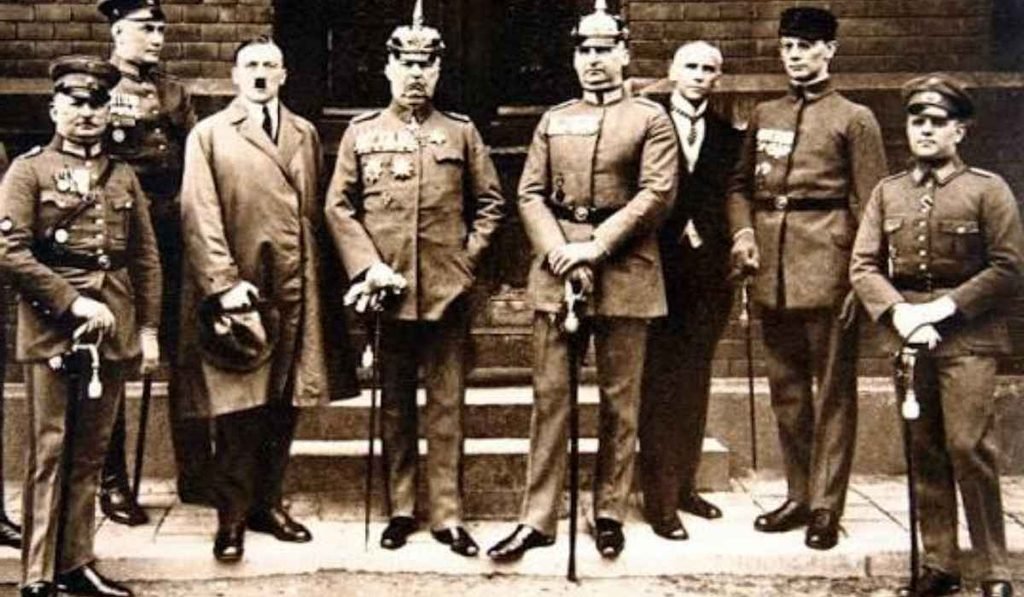
The principal fascist dictatorships in Europe collapsed during the final years of World War II. Mussolini’s government fell in 1943 after military setbacks and growing opposition within Italy. Germany’s Nazi dictatorship ended in May 1945 following the Allied defeat of the country. Mussolini was captured and killed in April 1945, while Hitler died in Berlin shortly before Germany surrendered. These events marked the destruction of the major wartime fascist governments and opened a new period of European reconstruction.
21. The Impact of Fascism on Modern Society
The historical consequences of fascism continue to influence modern politics, education, and international relations. The experience of dictatorship encouraged countries to strengthen constitutional protections, human rights standards, and international cooperation. Museums, memorials, universities, and educational institutions preserve evidence of persecution and wartime destruction. Modern societies also study authoritarian movements to understand how political extremism develops. Remembering these experiences encourages citizens to recognize discrimination, political intimidation, misinformation, and attacks on democratic institutions before they become deeply established.
22. How Historians Study Fascism Today
Historians examine fascism through original documents, political speeches, newspapers, government records, photographs, personal letters, and eyewitness accounts. They compare different movements to identify similarities and important differences. Academic research also considers economic conditions, social divisions, cultural influences, and international relationships. Historians do not always agree on one universal definition because fascist movements developed differently across countries. Careful historical research therefore requires evidence, context, and an understanding of the specific political circumstances surrounding each movement.
23. Common Misunderstandings About Fascism
One common misunderstanding is that every authoritarian government is automatically fascist. Although authoritarian governments restrict political freedoms, fascism has additional ideological and organizational characteristics. Another mistake is using the word as a general insult against anyone with whom someone disagrees. Historical terminology should be applied carefully and supported by evidence. It is also important to understand that ordinary patriotism, national pride, military service, and conservative political beliefs are not automatically signs of fascism.
24. The Importance of Remembering History
Learning about historical fascist movements provides important lessons about political responsibility and social cooperation. History demonstrates how discrimination, propaganda, political violence, and extreme nationalism can damage democratic institutions. Educational programs and historical memorials help younger generations understand the experiences of people who suffered under dictatorships. Remembering these events is not simply an exercise in studying the past. It also encourages informed citizenship, respect for different communities, and greater awareness of the importance of protecting individual freedoms.
25. The Future of Research and Public Discussion
Research into fascist movements continues to develop as historians discover new documents and examine previously overlooked experiences. Digital archives have made historical photographs, newspapers, government documents, and academic materials more accessible. Teachers and researchers can use these resources to explain political extremism in a balanced and evidence-based way. Public discussions also benefit from distinguishing historical facts from political opinions. Responsible research helps people understand the past without exaggerating similarities or ignoring the differences between historical and modern political movements.
26. Why the Danish Term Matters in Historical Research
Understanding Danish political vocabulary can make European historical research easier, particularly when reading original documents. The term fascisterne identifies a definite group of people rather than an individual political organization. Its meaning must therefore be interpreted according to the surrounding sentences, dates, and historical events. Readers researching Danish history should distinguish between fascist movements, Nazi organizations, political supporters, and resistance groups. Accurate translation prevents confusion and makes comparisons between Danish, German, Italian, and English historical sources more reliable.
27. How to Recognize Reliable Historical Information
Reliable historical research should use trustworthy educational institutions, academic publications, recognized museums, and established historical encyclopedias. Readers should compare information from several sources instead of relying entirely on social media posts or anonymous websites. Dates, political organizations, historical photographs, and quotations should be checked against original records whenever possible. It is equally important to distinguish documented events from interpretations and personal opinions. This approach produces more accurate historical knowledge and helps readers avoid misleading descriptions of political movements.
28. Lessons for Future Generations
The history of European fascism offers lessons about the value of democratic participation, social equality, and political accountability. Governments require independent institutions that can investigate wrongdoing and protect citizens from discrimination. Education also plays an important role because informed people are better prepared to evaluate political messages and recognize historical manipulation. Future generations can learn from previous mistakes by supporting peaceful political participation, respecting human rights, and rejecting political violence. These principles help create societies where disagreement does not become a reason for persecution.
Quick Facts Table
| Category | Details |
|---|---|
| Keyword | Fascisterne |
| English meaning | The fascists |
| Language | Danish |
| Singular form | Fascist |
| Related ideology | Fascism |
| Historical origin | Early 20th-century Europe |
| Main historical country | Italy |
| Important historical leader | Benito Mussolini |
| Other major example | Nazi Germany |
| Historical period | 1919–1945 |
| Main characteristics | Nationalism, authoritarianism, militarism |
| Historical significance | European political history |
29. Frequently Asked Questions
1. What does Fascisterne mean in English?
– It is a Danish word meaning “the fascists” and refers to people who support fascist political ideas.
2. Where did fascism originally develop?
– Fascism first became an organized political movement in Italy under Benito Mussolini after the First World War.
3. Who was the most famous fascist leader?
– Benito Mussolini was the founder of Italian fascism, while Adolf Hitler led Nazi Germany.
4. Was fascism present in Denmark?
– Yes, Denmark had fascist and Nazi-inspired political organizations, including DNSAP, founded in 1930.
5. Why is studying fascism important today?
– It helps people understand dictatorship, political extremism, propaganda, discrimination, human rights, and the importance of democratic institutions.
Conclusion
Fascisterne is an important Danish expression connected to the historical study of fascism and its supporters. Understanding its meaning provides an opportunity to explore European political history, the rise of authoritarian governments, the Second World War, and the consequences of extreme nationalism. These historical experiences continue to offer valuable lessons about democracy, freedom, equality, and human rights. Anyone interested in exploring this subject further can visit Wikipedia’s Fascism article for additional historical information, important figures, political developments, and related topics. Learning about this history encourages responsible research and a better understanding of the political events that shaped the modern world.