
1. Introduction to Frehf
The internet constantly introduces unfamiliar words, digital concepts, and expressions that attract attention from curious readers. Frehf is one such term that has started appearing in online searches and informational articles. People want to understand its meaning, possible origins, applications, and connection with modern business practices. However, there is no universally accepted definition available. Different online publications associate it with productivity, digital innovation, personal development, and organizational improvement. Understanding the term requires examining these interpretations carefully rather than accepting every online explanation as an established fact.
Quick Bio Table
| Category | Details |
|---|---|
| Name | Frehf |
| Type | Emerging online term |
| Meaning | No universally verified definition |
| Common interpretation | Future Ready Enhanced Human Framework |
| Main association | Productivity and innovation |
| Related areas | Technology and business |
| Main principles | Planning, awareness, behavior, improvement |
| Official founder | Not independently confirmed |
| Recognition | Not an established industry standard |
| Popularity | Appearing in online searches |
2. What Is Frehf?
Frehf is an unfamiliar online term associated with several different explanations. Some websites describe it as a framework for improving organizational performance, while others connect it with digital development and modern working practices. Its meaning depends heavily on the source using it. Unlike established business terminology, it does not have one widely recognized definition supported by authoritative documentation. Therefore, readers should consider it an emerging concept rather than a confirmed professional system. Examining its different interpretations provides a clearer understanding of why people are interested in the term.
3. What Does Frehf Stand For?
One commonly repeated interpretation expands FREHF as Future Ready Enhanced Human Framework. This proposed expansion suggests an approach that combines future planning, human understanding, and organizational development. However, there is insufficient independent evidence confirming that this is the original or official expansion. Several online publications repeat the same phrase without identifying a verified creator. Consequently, readers should distinguish between a commonly circulated explanation and an officially documented definition. The proposed interpretation can still introduce interesting discussions about adaptability, technology, and people-centered decision-making.
4. Possible Origins of the Term
The exact origin remains uncertain because there is no clearly established founding organization or original publication explaining its creation. Online articles offer different descriptions, making it difficult to identify a reliable starting point. Some associate the name with business frameworks, while others discuss it as a creative digital expression. It is possible that the word originated within a particular online community or private project. Nevertheless, these possibilities should not be presented as confirmed historical facts. Reliable origin information requires identifiable documentation and credible supporting sources.
5. Why Is This Term Attracting Online Attention?
Unusual keywords often attract attention because people naturally want explanations for unfamiliar information. Search engines also make it easier for newly introduced expressions to reach wider audiences. When several websites publish articles about the same unfamiliar term, curiosity can increase further. Readers may encounter it while researching technology, productivity, business development, or internet trends. However, search visibility does not necessarily demonstrate widespread adoption. A keyword can become popular in search results without representing a recognized product, established company, or professional methodology.
6. The Connection With Modern Business Practices
Modern businesses regularly explore new approaches to improve planning, communication, and performance. The proposed interpretation connects with several familiar management principles, including strategic planning and continuous improvement. These principles help organizations understand their objectives and use available resources effectively. Businesses also need to consider employee experiences and customer expectations when introducing changes. Although the name itself is not an established management standard, the ideas associated with it can encourage useful conversations about organizational effectiveness, responsible innovation, and long-term development.
7. Understanding the Four Main Principles
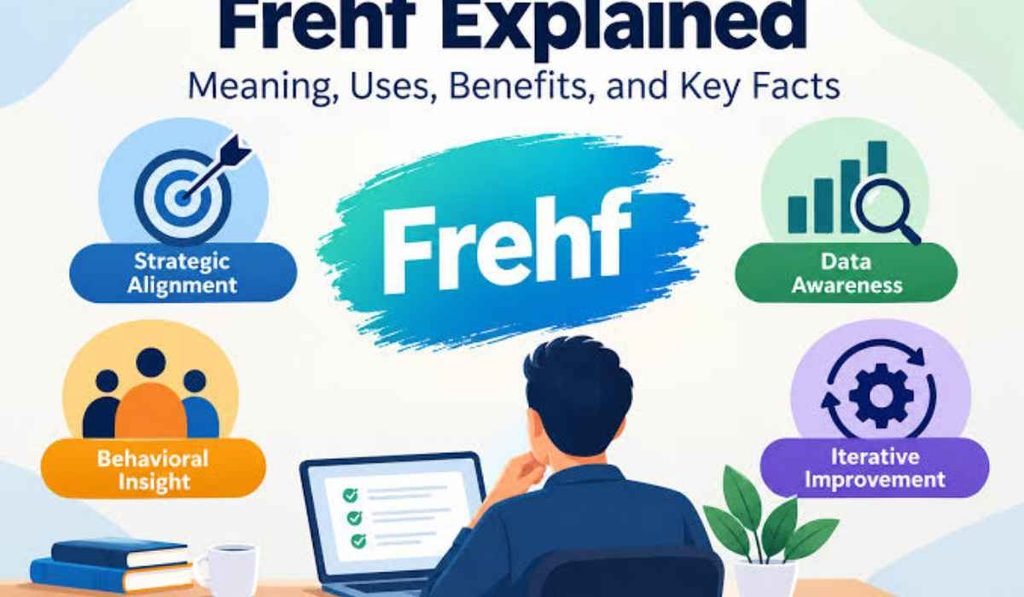
Several online descriptions associate the proposed framework with four important principles. These include Strategic Alignment, Data Awareness, Behavioral Insight, and Iterative Improvement. Each principle represents an established area of business thinking rather than a newly proven discovery. Together, they describe a general approach to organizing work, understanding information, recognizing human behavior, and making gradual improvements. Their usefulness depends on how organizations apply them in real situations. Readers should understand these principles individually instead of assuming that their combination establishes a scientifically validated system.
8. Strategic Alignment and Its Importance
Strategic alignment means ensuring that organizational Frehf objectives, resources, and everyday activities support the same overall direction. A business may have excellent employees and modern equipment, but poor coordination can prevent meaningful progress. Clear goals help departments understand their responsibilities and prioritize important tasks. Managers can also use regular meetings to review performance and identify problems. This principle is particularly valuable when organizations introduce new strategies or expand their operations. Consistent alignment reduces confusion and helps teams concentrate on measurable business objectives.
9. Data Awareness for Better Decisions
Data awareness involves understanding relevant information before making important decisions. Organizations collect information about customers, sales, employee performance, market conditions, and operational activities. Properly examining these details can reveal opportunities and identify weaknesses. However, collecting large amounts of information does not automatically guarantee better decisions. Businesses need accurate records, appropriate analysis, and responsible data management. They should also protect confidential information and respect privacy requirements. When used carefully, data awareness supports informed planning and reduces unnecessary dependence on assumptions.
10. Behavioral Insight and Human Understanding
Behavioral insight focuses on understanding how people think, respond, and make decisions in different situations. In business environments, employee motivation, customer expectations, and workplace communication can influence overall performance. Managers who understand these factors may find it easier to create supportive working conditions. Businesses can also study customer feedback to improve products and services. Human behavior is complex, so organizations should avoid making assumptions based on limited information. Listening, observation, and respectful communication are important parts of developing meaningful behavioral understanding.
11. Iterative Improvement and Continuous Development
Iterative improvement means making gradual changes, examining their results, and adjusting strategies when necessary. Instead of expecting one major decision to solve every problem, organizations can introduce manageable improvements over time. For example, a company might test a new customer support process before introducing it across the entire organization. Feedback helps identify what works and what requires adjustment. This approach resembles established continuous improvement practices. It encourages experimentation, learning, and flexibility while helping businesses avoid unnecessary risks associated with poorly tested changes.
12. How These Principles Work Together
The four principles can complement one another when applied within a consistent organizational strategy. Strategic alignment establishes the direction, while data awareness provides information for evaluating progress. Behavioral insight helps decision-makers understand the people affected by changes. Iterative improvement allows organizations to test their decisions and make adjustments. These activities create a practical cycle of planning, implementation, evaluation, and development. Although this combination is not independently validated as a unique framework, the underlying management practices can support thoughtful organizational decision-making.
13. Potential Benefits for Businesses
Businesses exploring these ideas may identify opportunities to improve communication, planning, and operational efficiency. Clear objectives help employees understand their responsibilities, while reliable information supports better decisions. Understanding human behavior can also improve workplace relationships and customer experiences. Gradual improvement gives organizations opportunities to identify problems before they become larger challenges. However, results depend on implementation, leadership, available resources, and organizational circumstances. Companies should evaluate actual performance rather than assuming that adopting a new name or framework automatically produces positive outcomes.
14. Applications in Personal Development
The same general principles can be applied to personal development. Individuals can establish realistic goals, monitor their progress, understand their habits, and make adjustments when necessary. For example, someone learning a new skill might create a weekly schedule and review completed activities. Tracking progress provides useful information about strengths and weaknesses. Understanding personal behavior can also reveal distractions and difficulties that affect consistency. These practices encourage discipline and flexibility without requiring individuals to purchase a special program or follow an unverified methodology.
15. Relationship With Digital Technology
Digital technology plays an important role in modern organizational development. Businesses use software, communication platforms, analytics systems, and automation tools to manage everyday activities. The ideas associated with this term can be discussed alongside these technologies because they involve planning, information, and improvement. However, it is important not to confuse a conceptual discussion with a functioning technology product. No independently verified software platform can be confidently identified from the available information. Readers should request technical documentation before accepting claims about specific digital capabilities.
16. Is Frehf an Artificial Intelligence Tool?
Some online discussions connect the term with artificial intelligence and modern automation. These connections may reflect broader conversations about how technology can support human work. However, there is insufficient independent evidence establishing a verified AI application under this name. A genuine AI product should provide identifiable developers, technical documentation, privacy information, and clear descriptions of its capabilities. Readers should not assume that an unfamiliar keyword represents functioning software simply because online articles mention artificial intelligence or digital transformation.
17. Is It a Real Company or Organization?
Another common question concerns whether the name belongs to an established company. Available online descriptions do not provide enough independently verified information to identify a definitive organization, founder, or registered business behind the term. This does not prove that nobody has ever used the name privately or commercially. It simply means that a reliable connection has not been established. Anyone considering a business relationship should verify company registration, ownership, contact information, and independent customer experiences before making commitments.
18. Can Beginners Understand These Concepts?
Beginners can understand the underlying ideas without having professional experience in business management. Strategic planning starts with identifying important objectives. Data awareness involves examining useful information, while behavioral insight means understanding how people respond to different situations. Iterative improvement simply encourages people to review their progress and make reasonable adjustments. These principles can be learned through everyday activities, educational resources, and practical experience. Their straightforward nature makes them accessible to students, entrepreneurs, employees, and individuals interested in improving their working habits.
19. Common Misunderstandings
One misunderstanding is assuming that every website provides the same definition. In reality, online publications associate the term with different subjects and interpretations. Another mistake is treating a proposed acronym as an officially confirmed expansion. Some readers may also believe that a popular search result automatically represents a recognized business or software platform. These assumptions can create confusion. Checking original sources, comparing independent information, and separating opinions from verifiable facts are better ways to develop an accurate understanding.
20. How to Research the Term Properly

Researching unfamiliar terminology requires patience and careful evaluation. Begin by checking the exact spelling and examining the original page where the expression appeared. Next, look for an official explanation, an identifiable author, and supporting documentation. Compare multiple independent sources instead of relying on websites that repeat identical statements. If the term is connected with a product or organization, examine its registration details and published policies. This process helps readers identify unsupported claims and distinguish genuine information from search-focused promotional content.
21. Important Safety Considerations
People researching unfamiliar online platforms should follow ordinary internet safety practices. Avoid downloading unknown files, sharing confidential information, or providing payment details before verifying a website. Check whether a platform has understandable privacy policies, working contact information, and identifiable ownership. Be especially cautious when websites promise guaranteed earnings, exceptional results, or exclusive access without providing evidence. These precautions apply to any unfamiliar online service. Responsible research helps protect personal information and reduces the possibility of becoming involved with misleading websites.
22. Advantages and Limitations of the Proposed Approach
The proposed approach has several appealing features because it encourages planning, informed decisions, human understanding, and continuous development. These ideas can be useful in many professional and personal situations. However, the terminology also has limitations. Its official meaning, original creator, and independent validation remain uncertain. Additionally, applying general management principles does not guarantee measurable success. Organizations should evaluate each practice according to their specific needs and use established research when making important operational decisions.
23. The Future Possibilities
The future of the term will depend on whether an identifiable organization or community develops a consistent explanation and provides credible documentation. New terminology sometimes becomes established when people adopt it across professional or educational environments. However, popularity alone cannot establish its legitimacy. If a clear methodology, documented applications, and independent evaluations become available, readers may have stronger evidence to assess its significance. Until then, it is more appropriate to discuss its proposed ideas without predicting widespread adoption or guaranteed future success.
24. Why Reliable Information Matters
Reliable information allows readers to make decisions based on evidence instead of assumptions. This is especially important when researching unfamiliar terminology that appears across multiple websites. Repeated statements can create an impression of authority even when the original source is unclear. Readers should look for primary documentation, credible research, transparent authorship, and independently supported claims. They should also recognize when information is unavailable. Being honest about uncertainty is more useful than inventing a detailed explanation that cannot be supported by trustworthy evidence.
25. Final Thoughts on Frehf
Frehf represents an interesting example of how unfamiliar terminology can attract attention through online publishing and search activity. Its proposed connection with strategic alignment, data awareness, behavioral insight, and iterative improvement provides an opportunity to explore useful management principles. Nevertheless, its official definition, original creator, and recognition remain unconfirmed. Readers should approach the subject with curiosity while checking the evidence behind individual claims. For additional background on related management practices, visit Wikipedia’s Continuous Improvement page. Understanding established principles and verifying unfamiliar terminology will always be more valuable than accepting unsupported online promises.
Frequently Asked Questions
1. What does Frehf mean?
– It is an emerging online term with several proposed meanings, but no universally verified definition.
2. What does FREHF stand for?
– Some websites use Future Ready Enhanced Human Framework, although its official status remains unconfirmed.
3. Is Frehf a real business framework?
– It is described as a framework online, but it has not been independently established as a recognized professional standard.
4. What are its four main principles?
– Strategic Alignment, Data Awareness, Behavioral Insight, and Iterative Improvement.
5. Is Frehf connected to artificial intelligence?
– Some publications associate it with AI and digital innovation, but no independently verified AI product has been established.