
startupbooted is presented as a business resource and consulting brand focused on helping entrepreneurs, startups, and growing companies make stronger decisions. Its public material emphasizes business growth, financial planning, startup advisory, market research, performance analysis, and practical strategy. The brand also highlights support around pitch decks, financial modeling, budgeting, and fundraising.
| Topic | Details |
|---|---|
| Brand | startupbooted |
| Main Focus | Startup and business growth |
| Key Areas | Strategy, finance, research, technology |
| Audience | Founders, entrepreneurs, small businesses |
| Services | Pitch support, financial modeling, fundraising |
| Approach | Practical and data-informed |
What Is startupbooted?
startupbooted is best understood as a business-focused platform designed to support founders and business leaders. Its public website describes a practical approach to growth, financial management, strategic planning, and business technology. The goal is to turn complicated business decisions into clearer actions. Rather than focusing only on startup ideas, the platform discusses the systems behind sustainable performance, including budgeting, cash flow, market research, analytics, and operational improvement.
The Purpose Behind the Brand
The central purpose of startupbooted is to make business knowledge more accessible and useful. Its stated mission centers on practical education, strategic insight, and financial confidence. This positioning can appeal to founders who need a clearer understanding of how different business functions connect. A strong strategy, for example, is more useful when supported by realistic financial planning and measurable performance targets. The brand therefore presents growth as a process built on informed decisions rather than short-term excitement.
Startupbooted Consulting for Founders
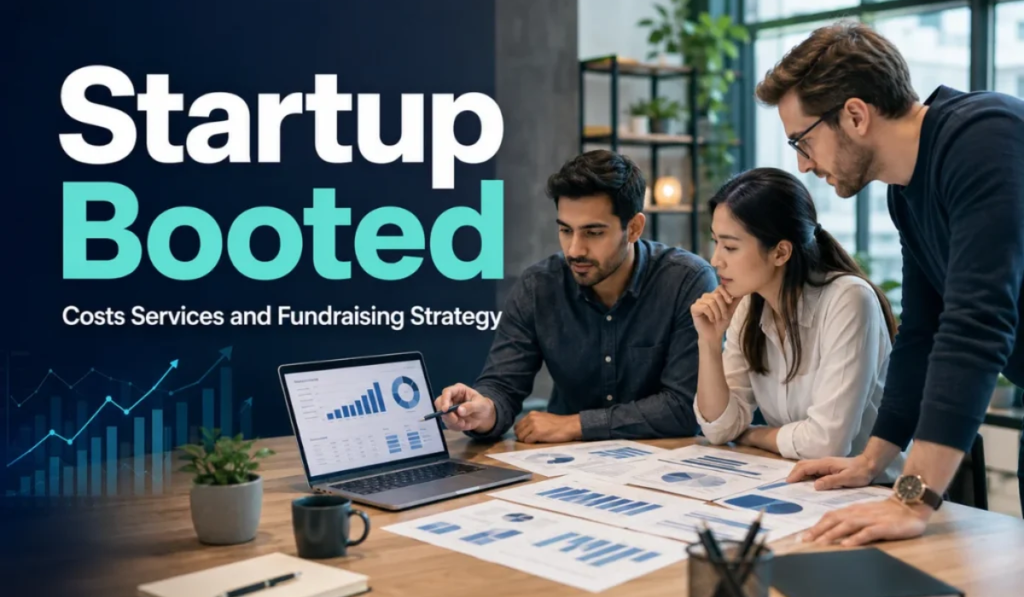
The platform offers consulting-oriented support for founders who are developing or improving a venture. Its public service descriptions include startup advisory, business planning, market positioning, and growth opportunities. For a new founder, outside guidance can help organize priorities and expose weaknesses that may be difficult to see internally. Consulting can also provide structure when a business is moving from an idea toward validation, early customers, revenue generation, or a larger growth plan.
Pitch Deck and Investor Preparation
The platform publicly promotes investor pitch deck design and investor pitching support. A strong pitch must communicate a business idea quickly and convincingly. A useful pitch deck normally explains the problem, solution, target market, business model, competitive position, traction, financial outlook, and funding request. The value of professional support is not simply attractive slides. The deeper objective is creating a logical story that connects the opportunity with evidence, realistic assumptions, and a clear reason an investor should continue the conversation.
Financial Modeling and Budgeting
Financial modeling is another important area associated with the platform. It describes financial modeling and budgeting as tools for creating a strategic financial roadmap. A useful model can estimate revenue, expenses, cash flow, profitability, and funding needs. For founders, this process can reveal whether growth assumptions are realistic. Budgeting also helps identify which activities deserve investment and which expenses should be controlled. Good financial planning does not guarantee success, but it can make risks easier to understand before major decisions are made.
Fundraising Strategy Explained
The platform also highlights fundraising strategy as part of its startup booted support. Fundraising should begin with a clear understanding of why capital is needed and what milestone the funding will achieve. Founders can evaluate options such as equity investment, debt, grants, strategic partnerships, or customer-funded growth. A thoughtful strategy considers timing, dilution, repayment obligations, investor fit, and business readiness. The strongest fundraising process connects the amount requested to measurable goals rather than treating funding itself as the definition of progress.
Business Growth Strategy
The platform approaches growth as a structured process involving goals, market awareness, customer acquisition, and operational readiness. Its business-growth resources emphasize sustainable expansion rather than growth without control. A company can increase sales while still becoming less efficient if costs rise too quickly. Effective growth planning therefore examines revenue quality, customer retention, margins, capacity, and cash flow. Founders should define measurable targets and review them regularly so growth decisions remain connected to the company’s financial and operational reality.
Market Research and Competitive Analysis
Understanding customers and competitors is essential before making major strategic decisions. The platform identifies market research and competitive analysis among its core business resources. Research can examine customer behavior, industry trends, competitor positioning, pricing, demand, and market gaps. The goal is not to collect information for its own sake. Useful research changes decisions. It can help a company refine an offer, identify a better customer segment, adjust pricing, or recognize threats before they become expensive problems.
Business Intelligence and Data of Startupbooted
The platform places emphasis on business intelligence, analytics, and performance reporting. Data becomes valuable when it improves a decision. Businesses can monitor revenue, conversion rates, customer acquisition costs, retention, margins, productivity, and other key performance indicators. A practical reporting system should focus on metrics that connect directly to business objectives. Too many numbers can create confusion, while the right indicators can reveal trends and help leaders decide where to invest, where to improve, and where to reduce waste.
Operational Efficiency
The platform also discusses business process optimization and operational efficiency. Efficient operations reduce unnecessary effort and help teams deliver consistent results. Founders can review workflows, identify bottlenecks, remove duplicate tasks, and clarify responsibilities. Process improvement becomes especially important as a company grows because informal systems that work with five people may fail with fifty. Better processes can support productivity, customer satisfaction, and cost control while giving leaders more time to focus on strategy and long-term development.
Automation and Digital Transformation
Technology can help businesses automate repetitive tasks and improve collaboration. The platform highlights workflow automation, artificial intelligence, cloud collaboration, and digital business tools within its resources. The right technology should solve a specific problem rather than being adopted simply because it is popular. Businesses can begin by identifying repetitive work, manual reporting, communication gaps, or data bottlenecks. From there, automation can be introduced carefully, measured against productivity gains, and adjusted when results do not justify the investment.
Financial Management for Small Businesses
Strong financial management is critical for small businesses because limited resources leave less room for mistakes. The platform emphasizes budgeting, forecasting, cash flow planning, profitability, and performance analysis. Owners should know how much cash is available, when payments are due, which products generate the best margins, and how much revenue is needed to cover operating costs. Regular financial reviews can help identify problems earlier and support more disciplined decisions about hiring, marketing, equipment, inventory, and expansion.
Cash Flow Planning
Cash flow deserves special attention because profitable businesses can still experience financial pressure when cash arrives later than expenses. The platform includes cash flow management among the areas it aims to help businesses understand. A practical cash-flow plan tracks expected inflows and outflows over time. Businesses can then prepare for seasonal changes, delayed customer payments, major purchases, taxes, and payroll commitments. Forecasting several scenarios also gives owners a clearer view of what could happen if sales fall, costs rise, or growth accelerates unexpectedly.
Strategic Planning
Strategic planning gives a business a framework for deciding what deserves attention first. The platform describes strategic planning as a process involving objectives, opportunities, risks, and actionable roadmaps. A useful plan should identify the company’s current position, desired destination, major priorities, required resources, and measurable milestones. It should also remain flexible because markets change. Reviewing strategy regularly allows leadership teams to respond to new customer behavior, competitor moves, technology shifts, and financial conditions without abandoning the company’s core direction.
Risk Management of Startupbooted
Every growing company faces financial, operational, market, and strategic risks. The platform includes risk management and business continuity among its business-focused topics. Risk planning does not mean predicting every possible problem. Instead, it means identifying important vulnerabilities and preparing reasonable responses. Businesses can assess supplier dependence, cash reserves, cybersecurity exposure, customer concentration, regulatory requirements, and operational interruptions. A simple risk register can assign responsibility, estimate potential impact, and track mitigation actions, making risk management part of everyday leadership rather than an emergency-only activity.
Sustainable Business Growth
Sustainable growth requires balance. The platform repeatedly connects growth with financial stability, operational efficiency, and informed decision-making. A business that expands faster than its systems can support may create service problems, cash shortages, or quality issues. Sustainable expansion usually means improving the economics of the business while increasing demand. Leaders can protect this balance by monitoring margins, capacity, customer satisfaction, employee workload, and cash requirements. The goal is not simply to become larger but to become stronger as the company grows.
Who Can Benefit?
The platform identifies entrepreneurs, startup founders, small-business owners, managers, financial professionals, marketing teams, consultants, operations leaders, students, and decision-makers among its intended audience. The practical value will vary by business stage. A first-time founder may need help understanding planning and validation, while an established company may need better reporting, process optimization, or financial forecasting. The broad audience reflects the idea that business education can support different roles, provided the information is adapted to the specific goals and constraints of each organization.
A Practical Founder Workflow
The platform can be viewed as a resource for organizing a founder’s decision-making workflow. A practical sequence is to define the problem, research the market, validate demand, build a business model, create financial assumptions, establish operating processes, and then measure performance. Each stage should produce evidence for the next. This approach reduces the temptation to scale before a business has a clear customer need. It also encourages founders to connect strategy with numbers, making it easier to recognize weak assumptions before they become expensive commitments.
How to Evaluate Consulting Support
When considering the platform or any consulting provider, founders should evaluate the specific problem they need solved. Ask whether the provider clearly explains its deliverables, process, assumptions, timelines, and expected outcomes. Review whether recommendations are tailored to the company rather than copied from generic templates. It is also useful to distinguish between educational information and professional advice. A consultant can organize analysis and strategy, but founders remain responsible for verifying legal, tax, investment, and other specialized requirements before acting.
Why Data-Driven Decisions Matter

The platform emphasizes data-driven decision-making rather than assumptions. This principle is valuable because business intuition can be useful but incomplete. Data can test whether customers are converting, whether marketing is producing acceptable returns, whether margins are improving, and whether a new process is actually saving time. The best approach combines evidence with judgment. Numbers need context, and qualitative customer feedback can explain why a metric changed. Together, these inputs can create a more reliable foundation for strategic decisions.
Startup Education and Continuous Learning
The platform also presents educational resources covering entrepreneurship, marketing, finance, artificial intelligence, technology, productivity, and strategic planning. Continuous learning matters because startup environments change quickly. Customer expectations, software tools, financing conditions, and competitive tactics can evolve within months. Founders who regularly update their knowledge are better positioned to question outdated assumptions. Learning does not require following every trend. It means identifying information that can improve a current decision and applying it carefully instead of chasing novelty without a clear business purpose.
Technology and Innovation
Modern companies increasingly combine traditional business disciplines with technology. The platform highlights artificial intelligence, automation, cloud solutions, and digital transformation as areas worth exploring. Innovation is most useful when it produces a measurable benefit, such as lower operating costs, faster service, better analysis, or improved customer experience. Businesses should consider security, training, integration, and ongoing costs before adopting new tools. A small pilot can often reveal whether an innovation deserves broader investment, reducing the risk of making large technology decisions based on hype.
The Difference Between Growth and Scaling
The platform discusses the difference between business growth and scaling. Growth can require additional resources as revenue increases, while scaling aims to increase revenue without proportional increases in cost. This distinction is important for founders planning expansion. Hiring more employees, opening locations, or adding infrastructure may produce growth, but the economics need to remain attractive. Scaling usually depends on repeatable processes, technology, strong unit economics, and efficient customer acquisition. Understanding the difference helps leaders choose the right strategy for their current stage.
Strengths of the Platform
A notable strength of the platform is the breadth of topics connected under one business-growth perspective. Its public material covers strategy, finance, market research, analytics, operations, technology, and startup advisory. This broad approach can help founders see connections between decisions that are often treated separately. For example, a pricing change affects revenue, margins, cash flow, marketing, and potentially customer positioning. Thinking across these areas can lead to more balanced decisions than optimizing one metric without considering its wider consequences.
Important Considerations
The platform should be assessed according to the specific information and services a founder needs. Public descriptions are useful for understanding positioning, but businesses should independently evaluate whether a consulting engagement fits their budget, objectives, industry, and stage. It is also important to verify current service details before making a purchasing decision because offerings can change. Founders should ask for clear deliverables and avoid assuming that consulting support guarantees fundraising, revenue growth, or business success. Good strategy improves decision quality, but execution and market conditions remain important.
Final Takeaway
Overall, the platform presents a practical business-growth orientation centered on strategy, financial discipline, market understanding, operational improvement, analytics, and technology. Its public materials position the brand as a resource for entrepreneurs and organizations seeking clearer decisions and sustainable growth. The most useful lesson is broader than any single service: strong businesses connect customer needs, financial realities, operational systems, and measurable goals. Founders researching the brand should focus on their specific needs, compare alternatives, verify current details, and use the available information as part of a thoughtful decision-making process.
FAQs
- What is startupbooted? – It is a business-focused platform and consulting brand covering startup advisory, growth strategy, finance, research, and business improvement.
- What services does startupbooted offer? – Public materials mention pitch deck support, financial modeling, budgeting, fundraising strategy, business planning, research, and investor pitching.
- Who can use startupbooted? – Entrepreneurs, founders, small-business owners, managers, and other professionals seeking practical business guidance may find its resources relevant.
- Does startupbooted focus only on fundraising? – No. Its published material also covers growth strategy, financial management, operations, analytics, technology, market research, and risk management.
- What should founders consider before using a consulting service? – They should compare deliverables, costs, experience, timelines, assumptions, and fit while independently verifying specialized legal, tax, or financial requirements.
Wikipedia or any related link to match the article can be researched separately if needed.